Jade in Japan: Itoigawa, the magatama and the national stone
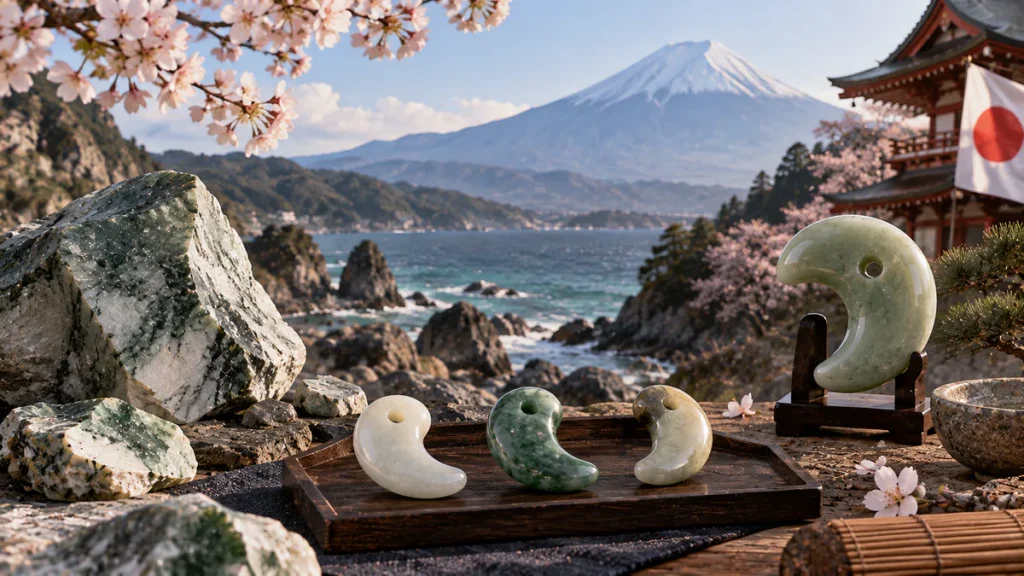
Jade in Japan: the jadeite of Itoigawa, the comma shaped magatama beads, and why Japan named jadeite its national stone in 2016. The story, told.
Jade in French museums: Guimet, Cernuschi, Carnac
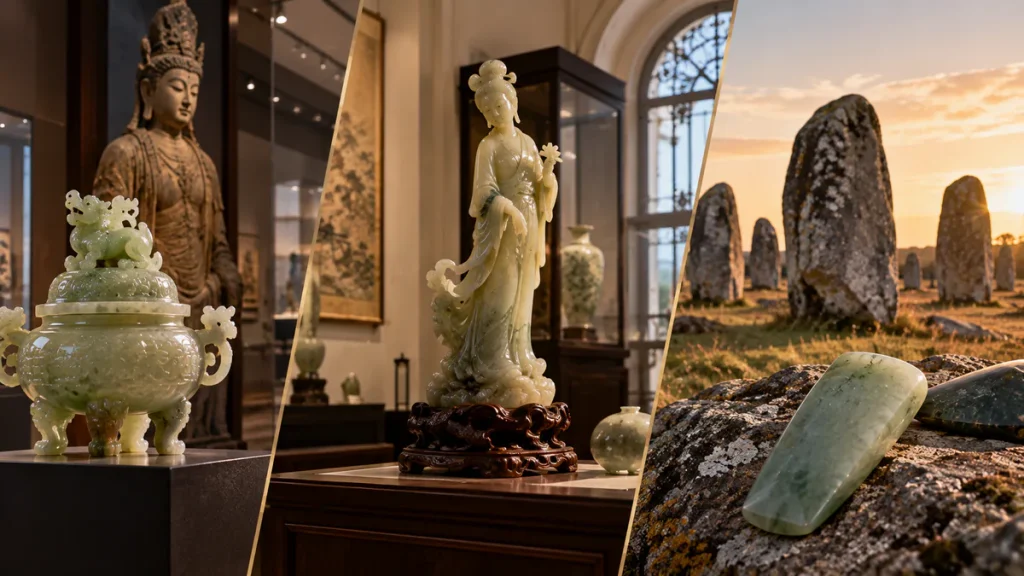
Where to see jade in France: the Guimet and Cernuschi museums in Paris for Chinese jade, and the Carnac museum for the great Alpine jade axes.
The jade glossary in fifteen words
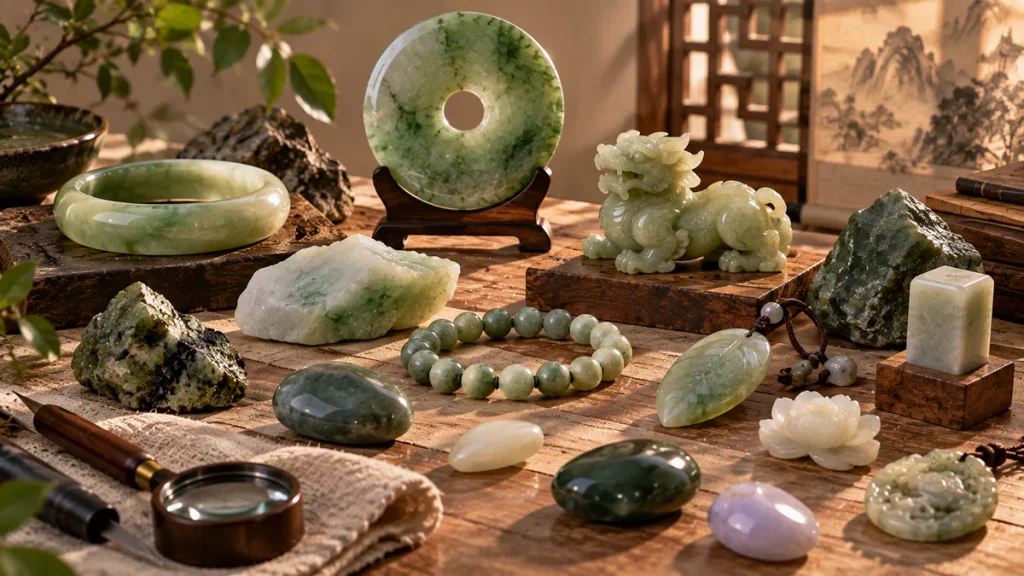
A jade glossary in fifteen words: jadeite, nephrite, mutton fat, imperial, bangle, cabochon, density and more, each defined in a sentence or two.
How jade stone forms
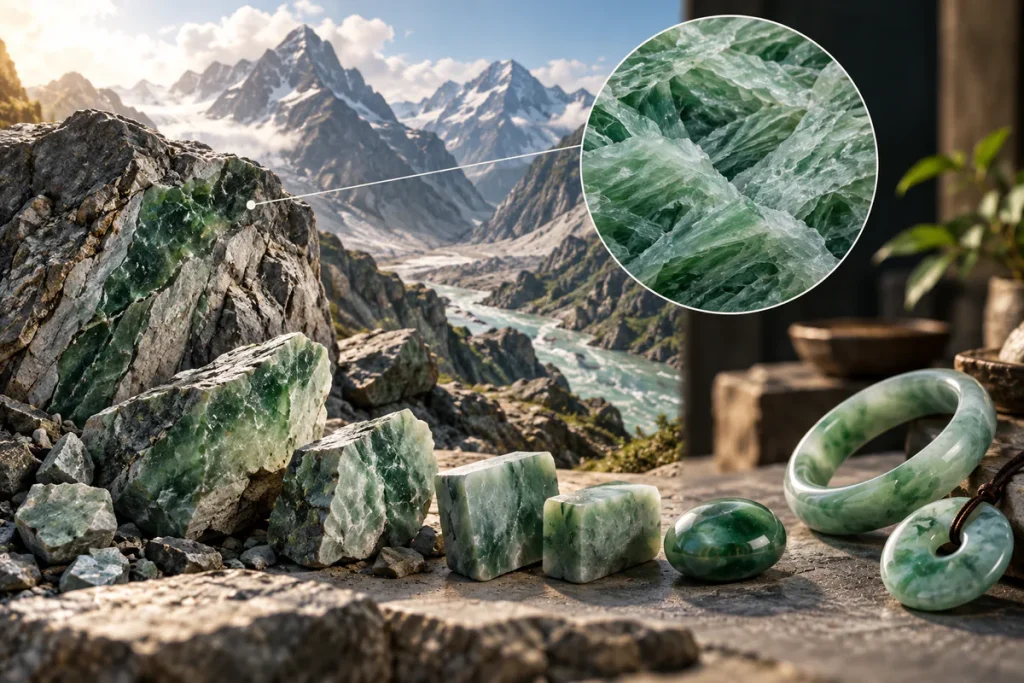
How is jade formed? Jadeite under high pressure and low heat in subduction zones, nephrite where serpentine meets other rock. The geology, simply told.
Why jade almost never breaks
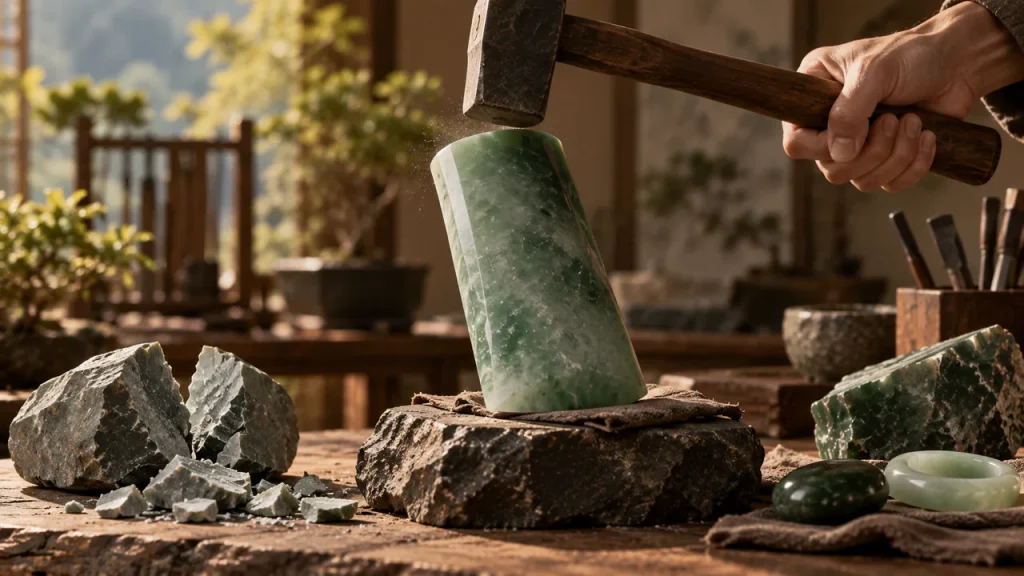
Why jade almost never breaks: the difference between hardness, where quartz beats it, and toughness, where jade outlasts almost every other stone.
Jade in Europe: Damour, Monte Viso, Carnac
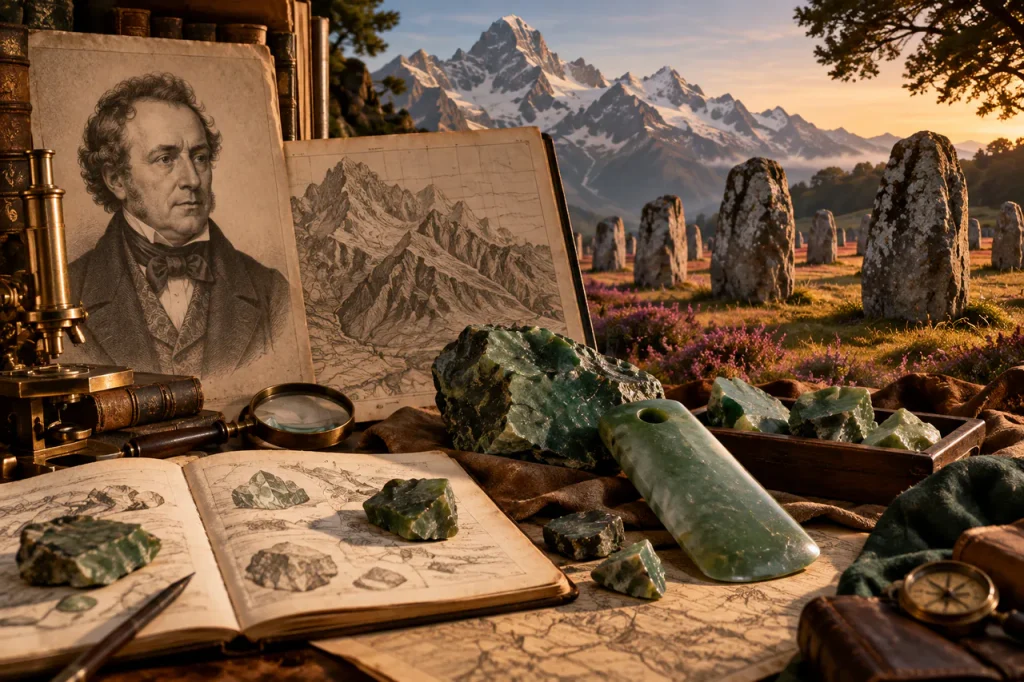
Jade in Europe: the Neolithic axes of Carnac, the Alpine quarries of Monte Viso found in 2003, and Alexis Damour, who split jade into two minerals.
Where jade comes from: Guatemala, Pounamu, Taiwan, Russia, Canada
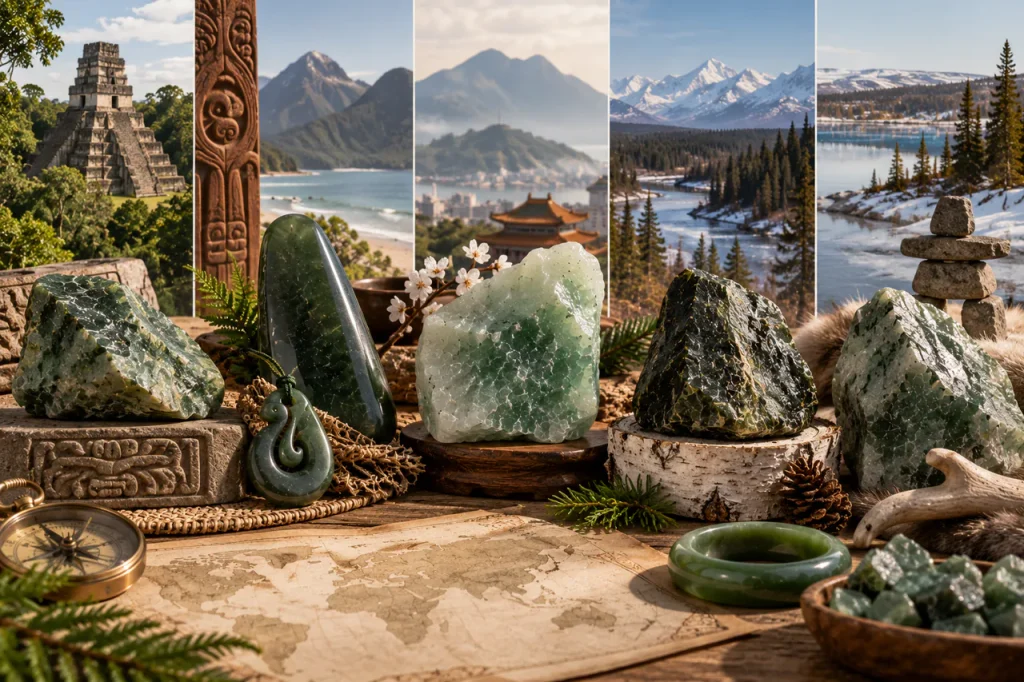
Where jade comes from: the jadeite of Guatemala and Myanmar, the nephrite of Canada, Russia, Taiwan and New Zealand, and what each deposit yields.
Green jade stone, from spinach green to bright green
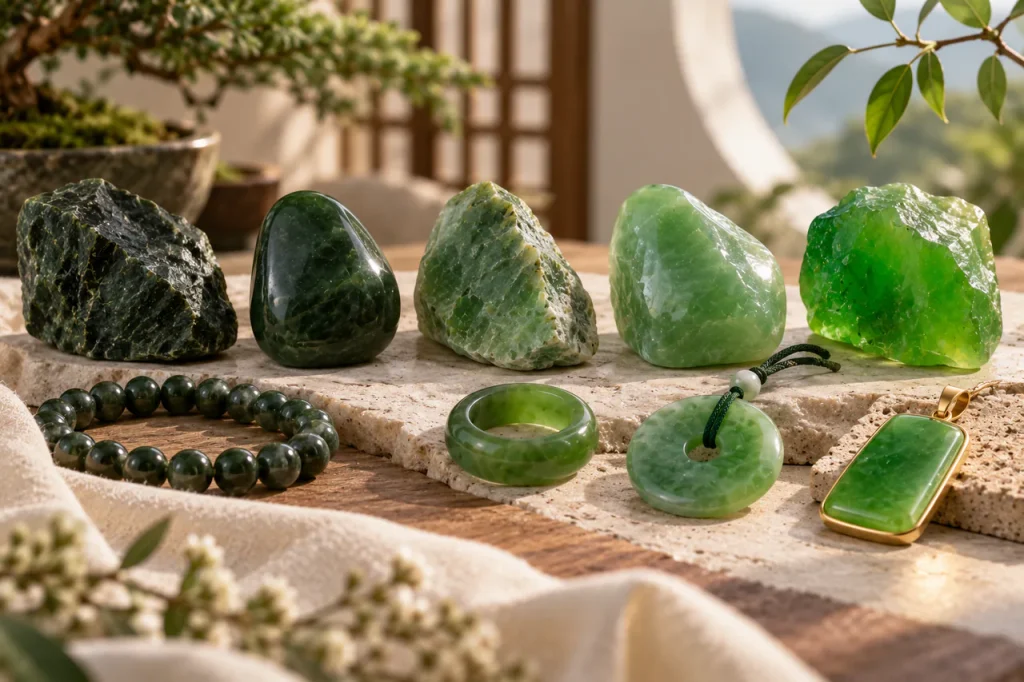
Green jade stone, from the spinach green of nephrite to the bright green of jadeite: where each green comes from, and why two greens differ in price.
White jade stone: mutton fat nephrite or quartzite
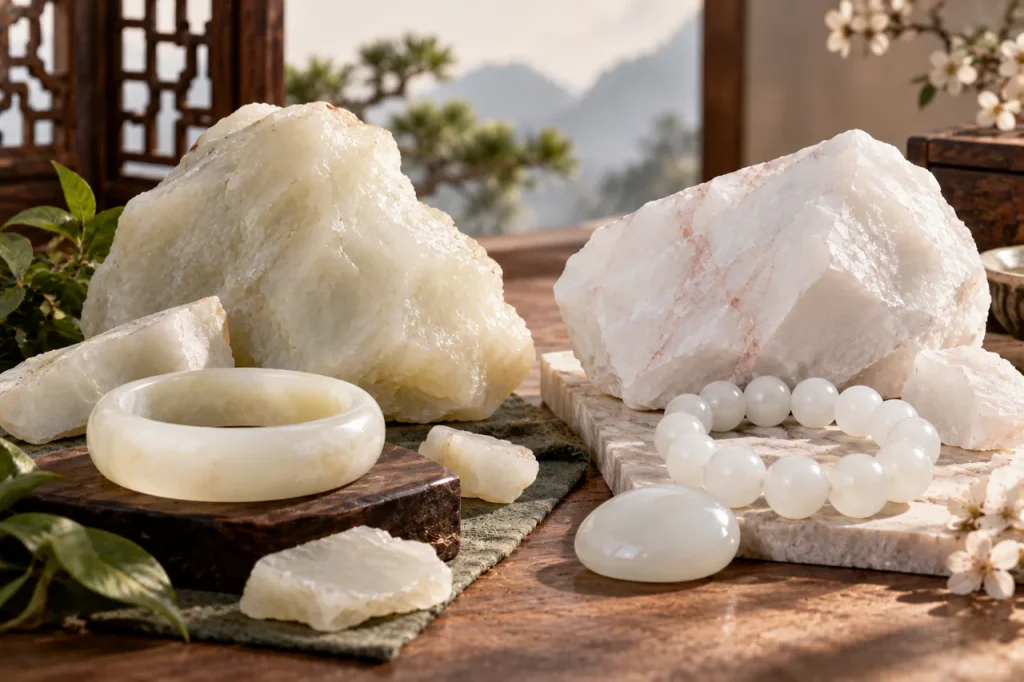
White jade stone: the prized mutton fat nephrite, and the quartzite sold under the same name. How density tells them apart, 2.95 against 2.65.
Jadeite or nephrite: two unrelated minerals
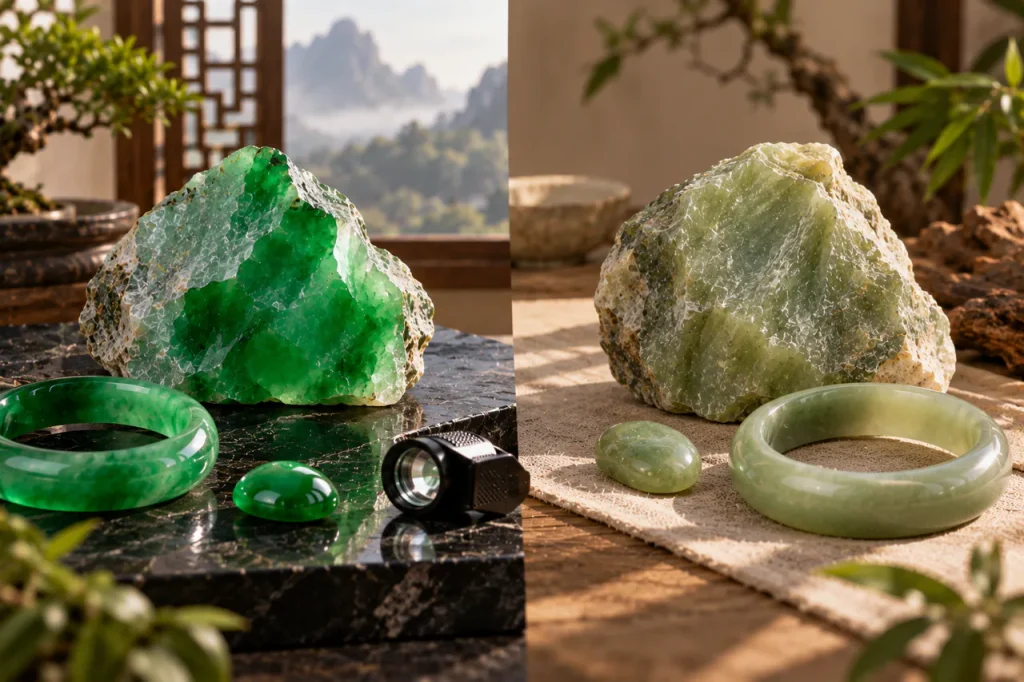
Jadeite vs nephrite: a pyroxene and an amphibole, told apart in 1863 by Alexis Damour. How they differ in density, hardness, colour and price.