Jadeite and nephrite, the mineral named on every product page
Jade Ijada, a jade jewellery workshop
Real jade bracelets, rings, necklaces, pendants and earrings, chosen one by one. Every product page names its mineral, and publishes its density whenever the stone reaches me unset.
density2.90 to 3.36jadeite and nephrite
- The mineral namedJadeite or nephrite, never a fake name
- The density publishedWhen the stone reaches me without a setting
- Sterling silver or gold platedAnd plated is written plated
- Delivery and returnsEverything is written on a single page
The shop
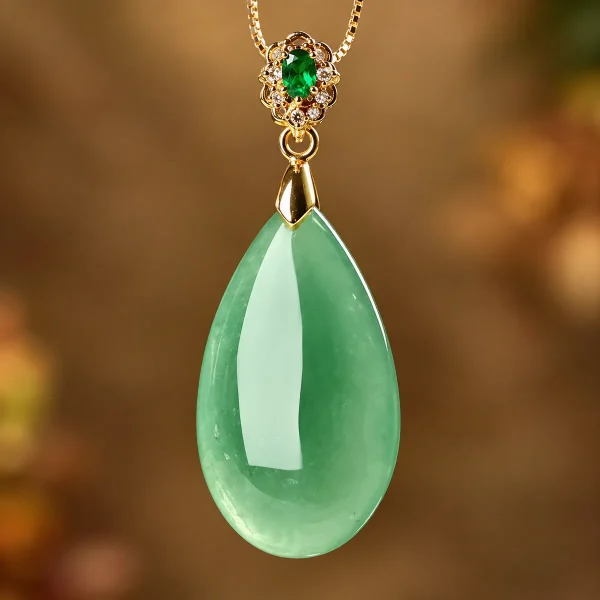
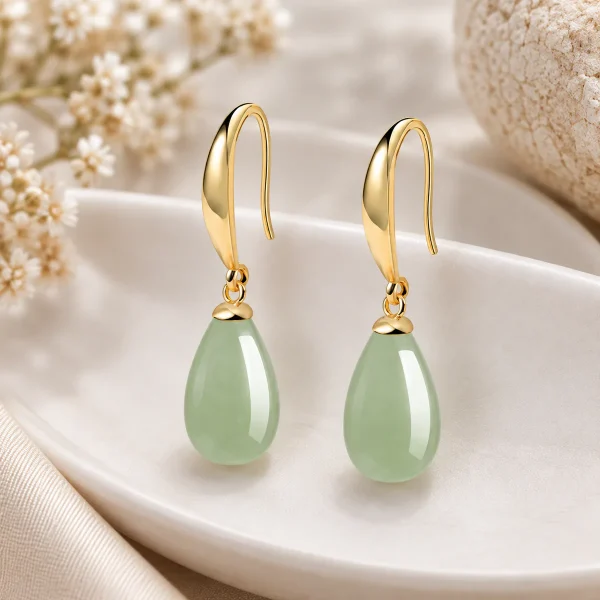
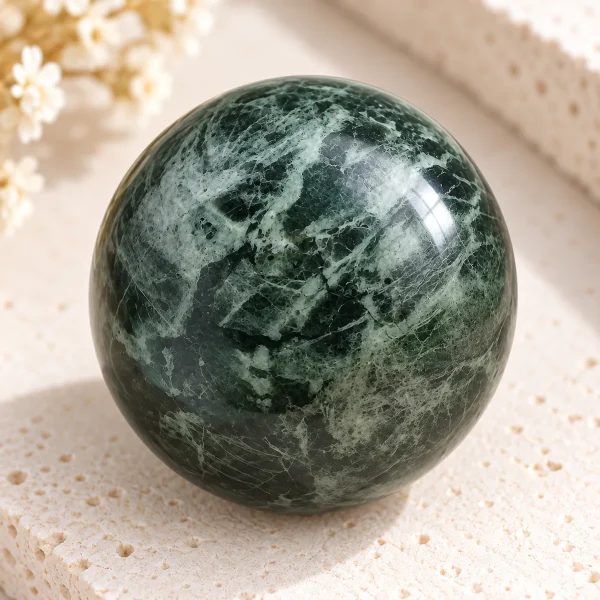
Six families of jade jewellery
My method
I weigh, I do not certify
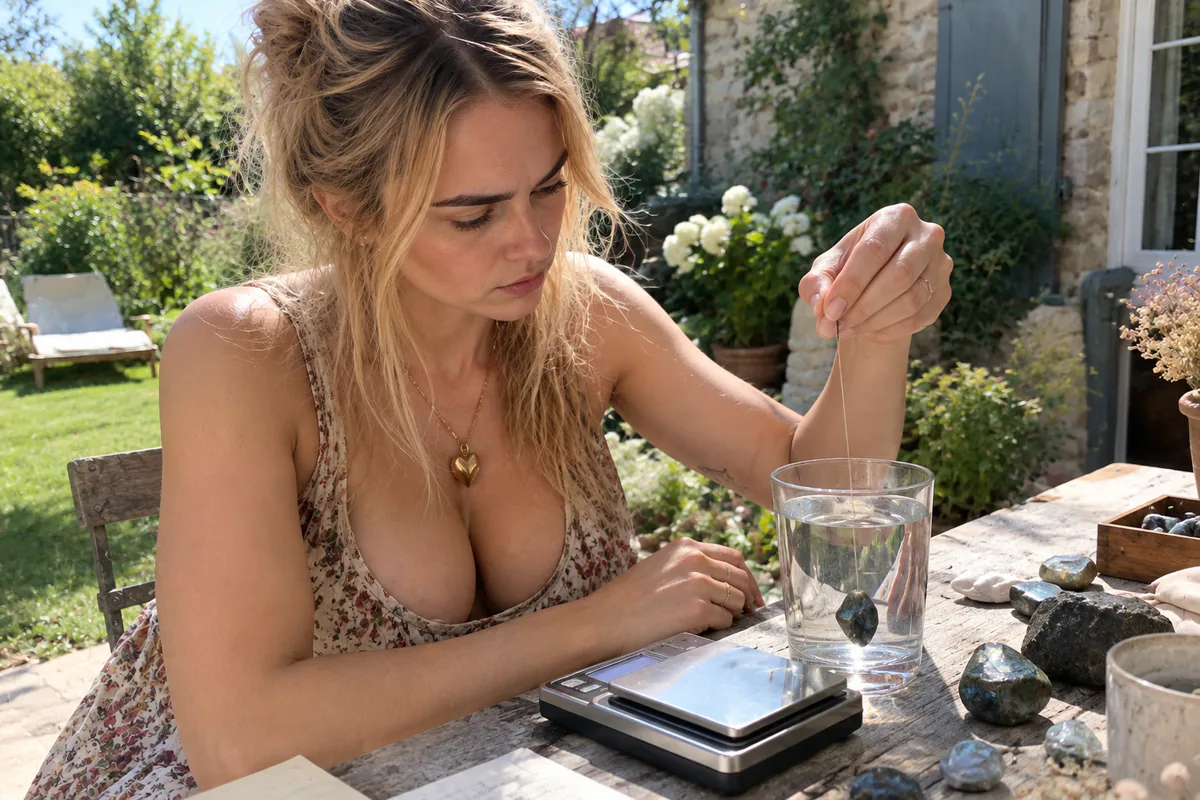
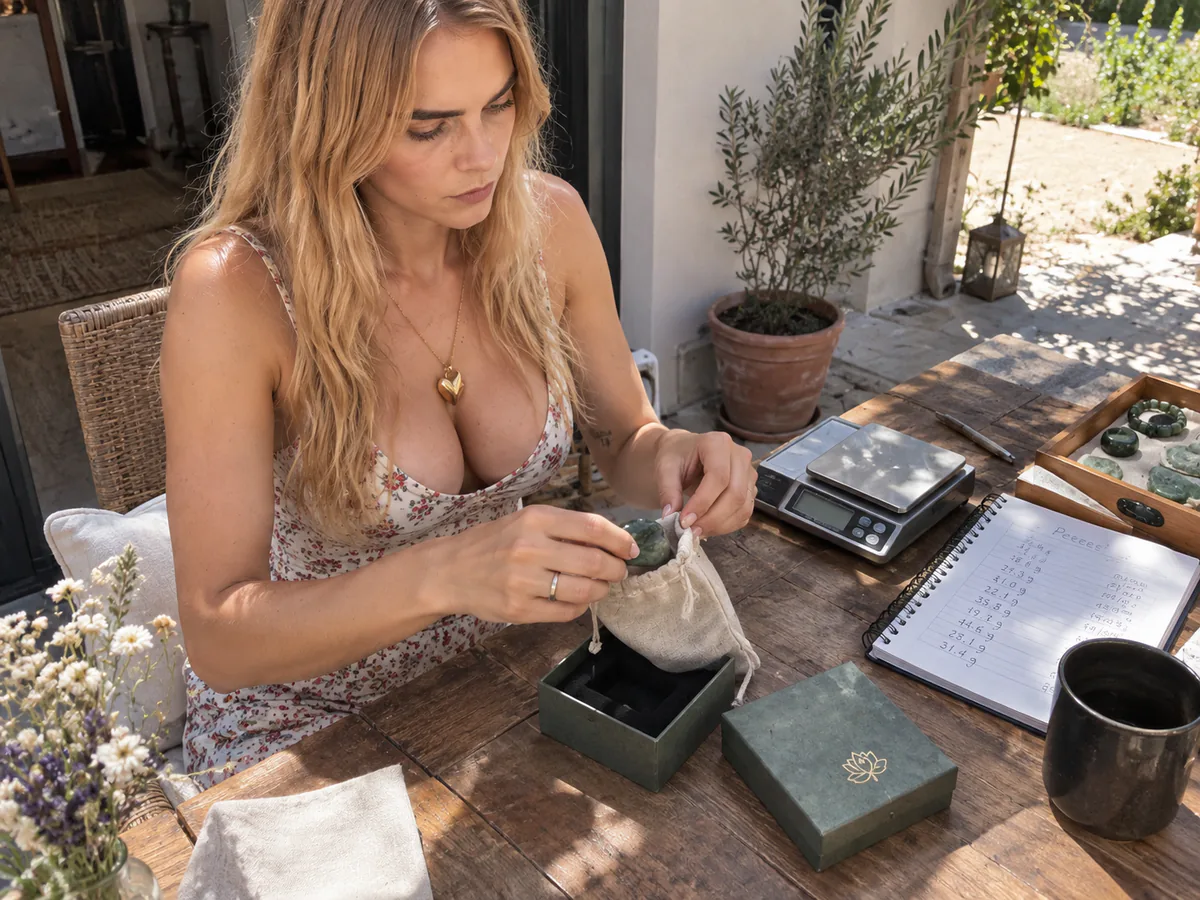
A scale, a thread, a glass of water. Before I put a piece online, I order one example for myself. When it reaches me without a setting, I weigh it in air, then hanging in water, and I publish the density I get. That figure names the mineral.
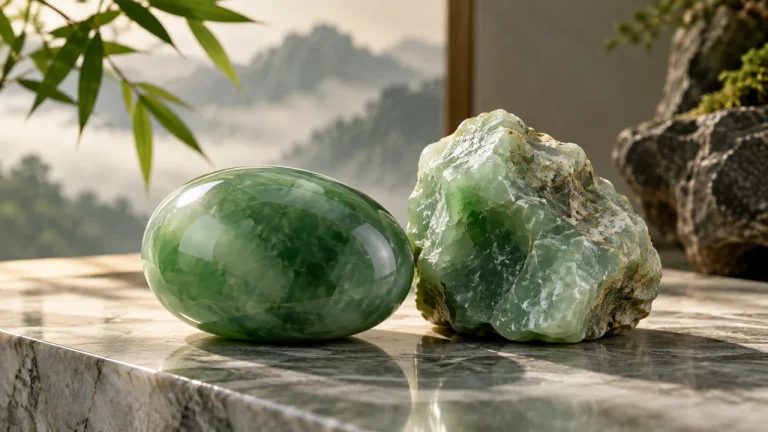
It matters because the word jade covers two unrelated mineral species, told apart in 1863 by a Frenchman, Alexis Damour: jadeite, a pyroxene, and nephrite, an amphibole. The two stones most often sold in their place fall even lower.
- jadeite3.25 to 3.36published value
- nephrite2.90 to 3.03published value
- serpentineabout 2.6published value
- quartziteabout 2.65published value
Four reference points from the mineralogical literature, not measurements taken on my pieces: the measurements live on the product pages of the shop, with their date.
What the weighing proves, and what it does not
I weigh one example per listing, never the piece that ships to you. And only when that example reaches me unset. On a set stone or a strung necklace, the metal and the thread enter the measurement and the figure means nothing: in that case the product page publishes no figure and says why.
And anyone can redo the figure without me: the product page publishes the weight in air and the weight in water, not just the result. The calculation is a division, and the protocol fits in a glass of water.
When I could not weigh a piece, the name of the mineral rests on what my supplier declares, and the product page says so plainly. Except for carved objects, rollers and pebbles included: those I only list if the weighing confirms the mineral, because that is the shelf where the market sells the most serpentine under the name jade. The fields every product page publishes, and what they do not prove.
Weighing does not separate a jadeite that was bleached and then impregnated with resin from one that was not: the resin barely changes the weight. It is thrown off as soon as there is metal or thread, and it loses its value on very small pieces, where the uncertainty of the scale swallows the gap between 2.95 and 2.65.
As for treatment, my supplier does not know the status of their stock, my scale cannot tell, and only infrared spectroscopy in a laboratory would settle it. My product pages therefore state that this status is not determined, and the treatment information sheet explains what that means for you. As for the tricks going around, the scratch, the sound, the cold, the torch, none of them proves anything reliable.
My commitments
What I refuse to write
A stone shop is judged as much by what it does not write. Six of these seven lines can be checked by opening any product page; on Burmese origin, you can only take my word.
- A stone that is neither jadeite nor nephrite carries its real mineral name, and the word jade leaves its title, its web address and its image file name.
- No new jade, Malaysia jade, Korean jade or olive jade labels: those names mean something else.
- No A, AA or AAA grade. It borrows the vocabulary of the only classification that exists, the one for treatments.
- No metal sold as what it is not: gold plated is written gold plated, never just gold.
- No Burmese jadeite, in any of the ten markets of this site.
- No promise of health, fertility or healing, and no price, delay or measurement invented to fill a gap.
- No average rating and no reviews on display until I have received real ones, and I will not write any in my customers’ place.
What I write instead fits in four lines: the mineral, its figure when the stone reached me bare, the date of the measurement, and that the treatment is not determined.
The workshop
Who chooses your jewellery, and where my jade comes from
My name is Jade. I am French, from Morbihan in Brittany, and I live in Tallinn. I mine nothing, I cut nothing, and I would rather say so than leave you guessing: my jade jewellery is set or chosen one by one, and I only list what I have been able to look at.
My supplier tells me where each lot comes from. I have no way to check it, and when I do not know, the product page says so. I refuse Burmese jadeite, by choice rather than by obligation. My full origin charter.
Burmese jadeite, Estonia, and the piece that ships to you
Neither the United States nor the European Union bans Burmese gems today: the American ban of 2008 was lifted in 2016. But since 2021 both have sanctioned Myanma Gems Enterprise, the state company that controls the trade, the United States on 8 April and the European Union on 21 June. The ethical argument does the rest, and it holds.
Estonia has no deposit, no lapidary tradition and no cutting workshop. I live in Tallinn and it has nothing to do with the stone. Better to say so than to make something up.
The pieces sold ship directly from my supplier: I never touch the one that reaches you. What I touch, weigh and repack is the reference example, and the shop only shows listings I have looked at.
The story of the name
A Spanish name, Breton axes
Piedra de la ijada, the stone of the flank.
Jade Ijada: the second word comes from the Spanish piedra de la ijada, coined around 1565 because the Spanish saw the conquered peoples wear it against kidney colic. The same object gives the Latin lapis nephriticus, hence nephrite, from the Greek nephros, the kidney. French went through éjade, then a faulty split gave le jade, and English borrowed the word from French. Entry jade of the Dictionary of the Académie française, ninth edition.
The other half of the story is Breton. In 1865, Damour identified jadeite in the polished axes of the Celtic monuments. In June 2003, Pierre and Anne-Marie Pétrequin found the Neolithic quarries of the Monte Viso and Beigua massifs, from which these axes travelled 3,300 kilometres, from Ireland to Bulgaria. The Museum of Prehistory in Carnac, in Morbihan, has some on display. I grew up next to those cases: that is why I sell this stone and no other. European jade, Damour, Monte Viso and Carnac.
A name born from a promise of healing, which I do not repeat
This name was born from a promise of healing, and I make none: no piece in this shop is offered as a treatment. What China and Mesoamerica made of it is a matter of history, and that is why it interests me.
Chinese tradition gave jade moral virtues more than healing ones, and modern crystal healing attributes others to it. I report these beliefs and attribute them to tradition, never to mineralogy. What tradition attributes to the stone.
A stone does not replace a doctor. I am not a therapist, I sell no effect, and the disclaimer that goes with this whole site says it again plainly.
Choosing well
The right size, first time
A bangle does not adjust
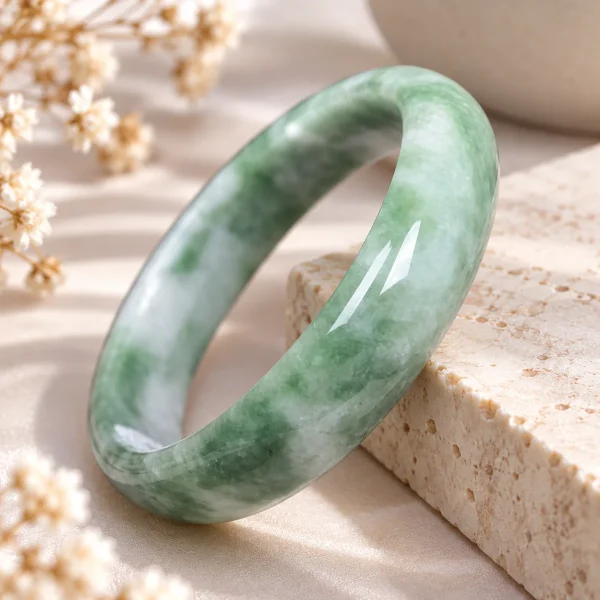
It does not open and cannot be shortened: it is sized by its inner diameter, and it has to slip over the hand. The bangles live on the jade bracelets page, and the measurement is taken on the hand folded into a cone, never around the wrist.
A ring is sized on the finger
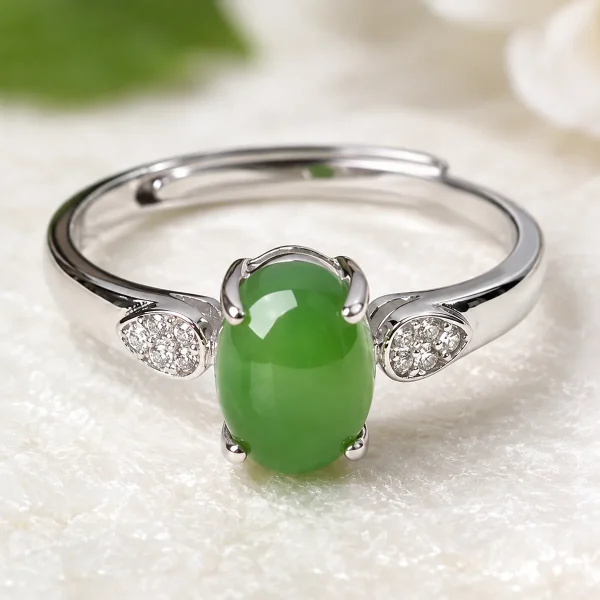
For a jade ring, finger size takes two minutes to measure, and the size guide gives the method, for the finger as for the length of a chain.
Gifting without knowing the size
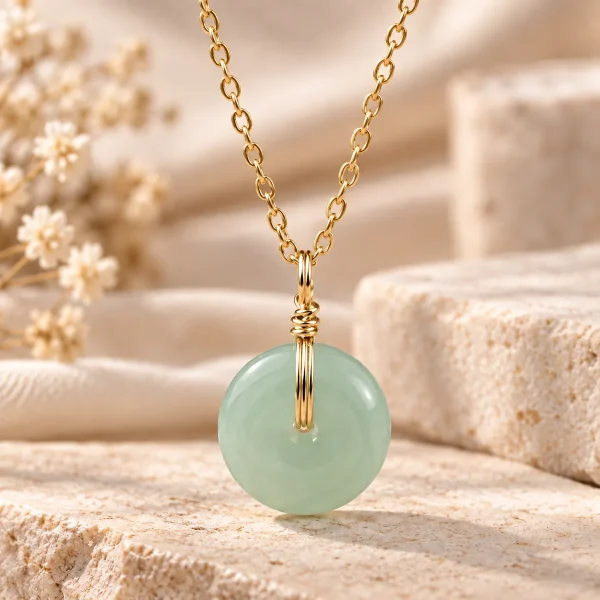
A jade necklace or a pendant is far harder to get wrong than a bangle. The format to choose for a gift, and returns are explained on the delivery and returns page, which is the reference.
The blog
Understand jade before you choose
 Jade stone: two minerals, one word
 Jadeite or nephrite: two unrelated minerals
- Judging jade quality: the six criteria
- Cleaning jade jewellery without damaging it
What I look at on a jade before buying it
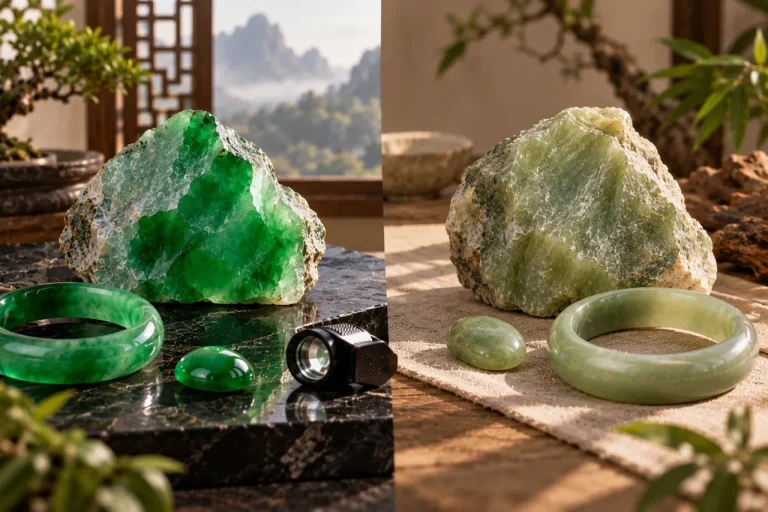
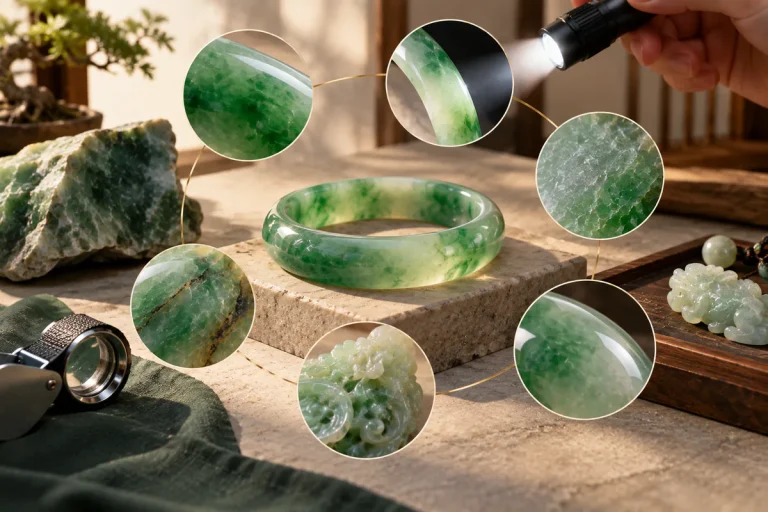
A jade is judged first by how far light travels into it. The material is waxy, not glassy: I look at translucency, the fineness of the grain and the quality of the polish before I let the colour win me over, even though the colour sets the price. The six criteria, one by one.
The green comes from chromium in jadeite and from iron in nephrite: the green jade jewellery in the shop runs from dark spinach green to an almost transparent water green. The milky white the trade calls mutton fat is a nephrite, and dyed quartzite circulates under the same name: between 2.90 and 2.65 in density, the scale decides.
Lavender and honey exist, and I take them when I find them. It is also where added colour is most common: a bright pink, a vivid blue or a turquoise sold as jade is almost always dyed material. Every colour, and where each one comes from.
Caring for and storing jade jewellery
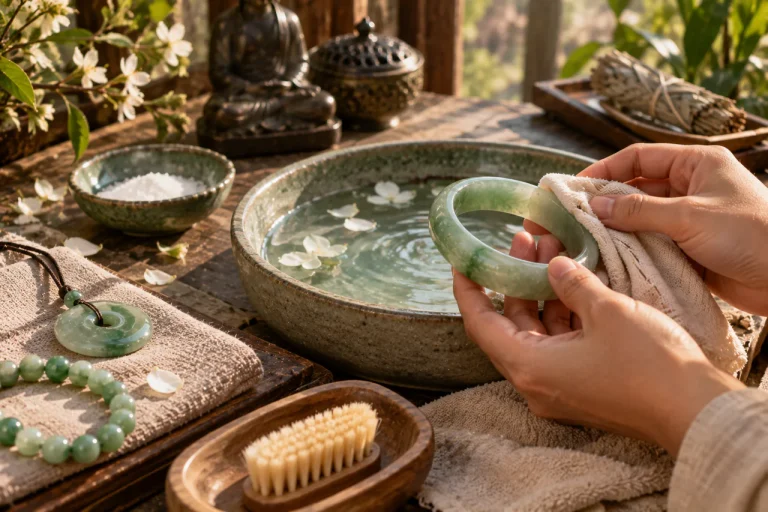
Lukewarm water, mild soap, a very soft brush if the setting allows it, then rinse and dry at once. The full method, setting by setting. Never ultrasound or steam: the resin in an impregnated piece does not survive the vibration. No salt either, which attacks the silver of the settings.
Household dust contains quartz, which sits at 7 on the Mohs scale, while nephrite sits between 6 and 6.5 and jadeite between 6.5 and 7. A dry cloth wiped over a dusty piece scratches it, and so does the bottom of a bag: jade is never stored loose with other jewellery.
On the other hand it is very hard to break, and hardness and toughness are two different things that almost everyone confuses.
Questions
Seven questions before you buy
Another question about a stone or a size? I answer the messages myself, and I am the only one who does.
What makes the price of a jade?
The colour and how even it is come first, then translucency, grain texture, the quality of the polish, cracks and finally size. Between two pieces of the same dimensions, one green can be worth ten times another, and the gap shows once you know where to look. In this shop, every product page shows its price and names the metal of its setting. The six criteria in detail.
Is jade a precious stone?
There is no legal answer to that question, and that is more interesting than a yes or a no. The French decree of 2002 on the gemstone trade does not sort gems into two camps, and it mentions neither jade, nor jadeite, nor nephrite. It does, however, ban two words the whole stone web uses anyway, and you will read neither of them here. What the decree really says, and what it bans.
Is your jade treated?
I do not know, and I would rather say so. My supplier does not know the treatment status of their stock, and weighing names the mineral without saying anything about a resin impregnation: only infrared spectroscopy in a laboratory would settle it. My product pages therefore state that this status is not determined. What the A, B and C classification covers, and what I can or cannot say about it.
Does jade scratch easily?
Less than people fear, and more than they think. Nephrite sits between 6 and 6.5 on the Mohs scale and jadeite between 6.5 and 7, while the quartz in household dust is at 7: storage scratches jade more often than wear does. On the other hand it is very hard to break, and that is another property, toughness. Why jade almost never breaks.
A bangle does not open: how do I choose the size?
It is sized by its inner diameter, and the measurement is taken on the hand folded into a cone, not on the wrist. A bangle either slips over the hand or it does not, there is no in between. The bangles are on the jade bracelets page. How to measure your hand before ordering one.
Which jade jewellery makes a good gift when you do not know the size?
A pendant or a necklace: they suit any build and need no measurement. Earrings work too, as long as you know whether the ears are pierced. A bangle and a fixed size ring are the two formats to avoid as a gift. Which format for whom.
What virtues are attributed to jade?
Chinese tradition saw moral virtues in it, loyalty, restraint, courage, more than healing ones; modern crystal healing attributes others to it. These are beliefs, reported as such and never demonstrated. No piece in this shop is sold as a treatment. What Chinese tradition and crystal healing attribute to it, and the disclaimer that goes with this whole site.
Nearly sixty pieces, a mineral named on each one
Real jade bracelets, rings, necklaces, pendants, earrings and objects, jadeite or nephrite, chosen one by one.