Jade pendants
A laughing Buddha, a Bi disc pierced at its centre, a dragon, a Guanyin, a bagua, the twelve animals of the Chinese zodiac, polished drops. Forty-five jade pendants, in jadeite or nephrite, with the mineral named on each one.
A pendant is worn against the skin and takes its warmth. It is the form where translucency counts most, because the stone spends its time in front of the light.
AffinerStoneColourStone shape+6
Showing 1–36 of 45 results
-

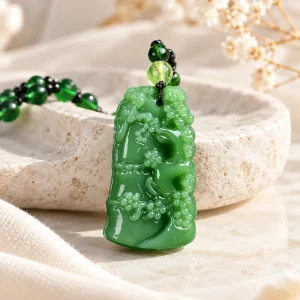
Carved jade pendant, a bunch of grapes
43,90 € Add to cart -
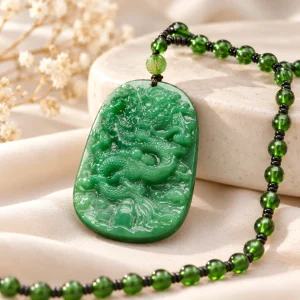
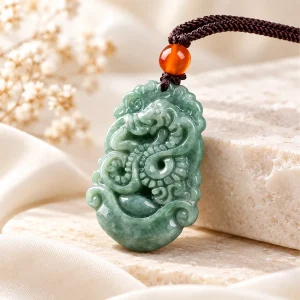
Chinese dragon jade pendant, carved plaque
43,90 € Add to cart -
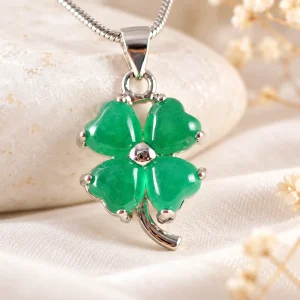
Four leaf jade clover pendant
50,90 € Add to cart -
Green jade pendant, a jadeite cabochon
57,90 € Add to cart -
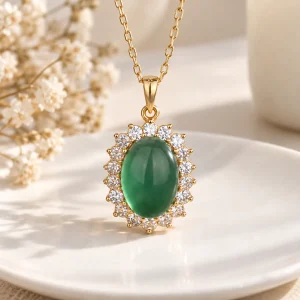
Jade and gold pendant, an oval cabochon in a halo
67,90 € Add to cart -
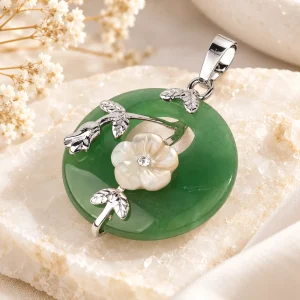
Jade and mother of pearl pendant, disc and flower
45,90 € Add to cart -
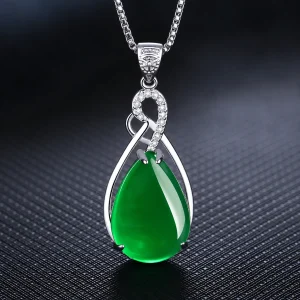
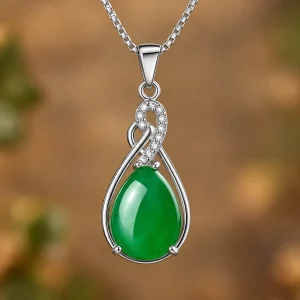
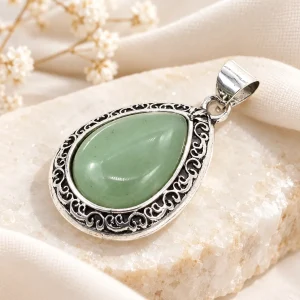
Jade and sterling silver pendant, a jadeite drop
62,90 € Add to cart -
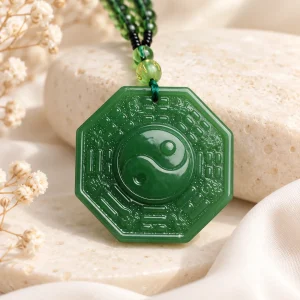
Jade bagua pendant, yin and yang
43,90 € Add to cart -
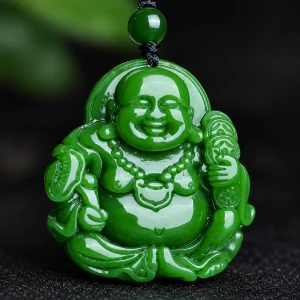
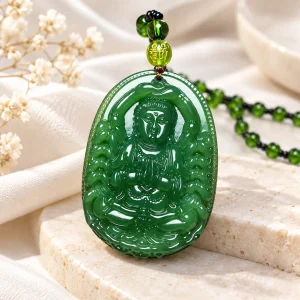
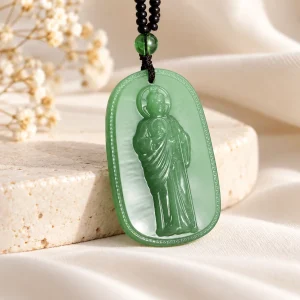
Jade Buddha pendant in green jadeite
44,90 € Add to cart -
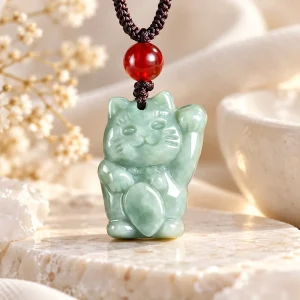
Jade cat pendant, the lucky beckoning cat
50,90 € Add to cart -
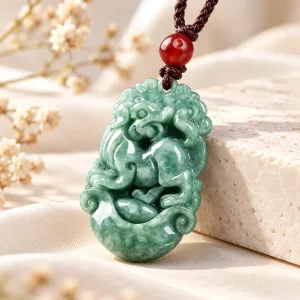
Jade dog pendant, Chinese zodiac sign
59,90 € Add to cart -
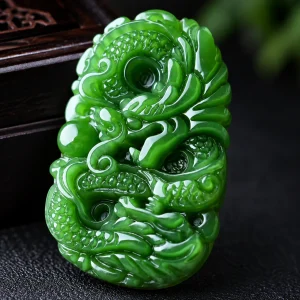
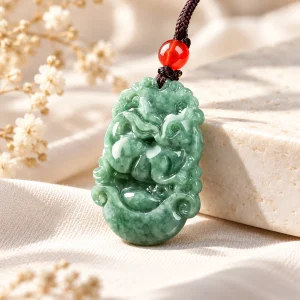
Jade dragon pendant in carved jadeite
47,90 € Add to cart -
Jade drop pendant in a chased silver tone mount
40,90 € Add to cart -
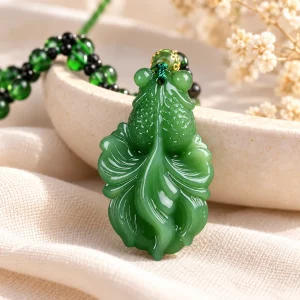
Jade fish pendant, carved in the round
43,90 € Add to cart -
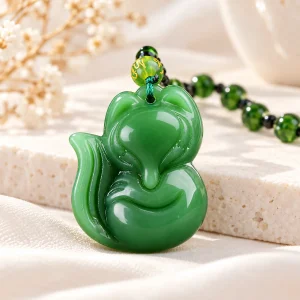
Jade fox pendant, carved in the round
43,90 € Add to cart -
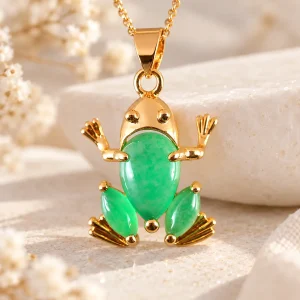
Jade frog pendant in a gold tone mount
50,90 € Add to cart -
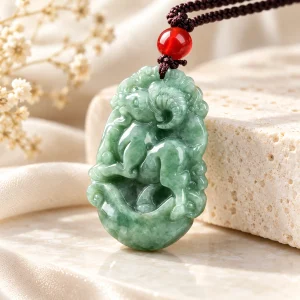
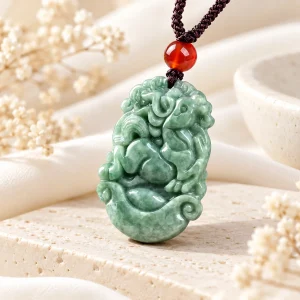
Jade goat pendant, Chinese zodiac sign
59,90 € Add to cart -
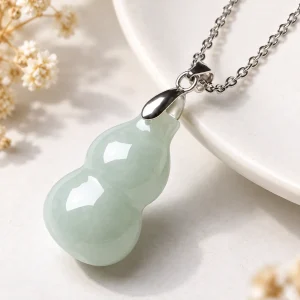
Jade gourd pendant in carved, polished nephrite
32,90 € Add to cart -
Jade guanyin pendant, seated on a lotus
43,90 € Add to cart -
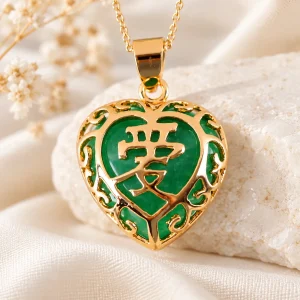
Jade heart pendant in an openwork gold tone mount
50,90 € Add to cart -
Jade horse pendant, Chinese zodiac sign
59,90 € Add to cart -
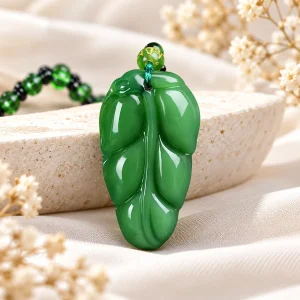
Jade leaf pendant, carved in volume
43,90 € Add to cart -
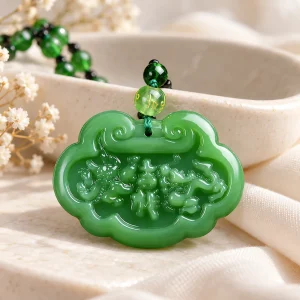
Jade lock pendant, the longevity lock
43,90 € Add to cart -
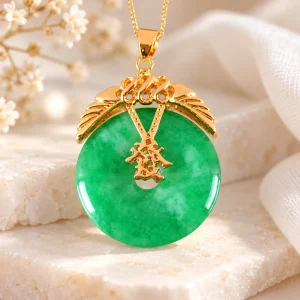
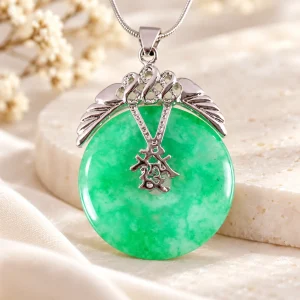
Jade medallion pendant with gold tone wings
50,90 € Add to cart -
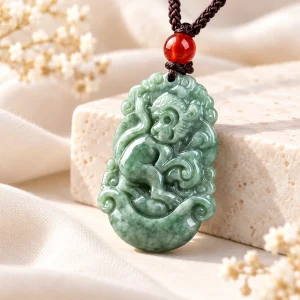
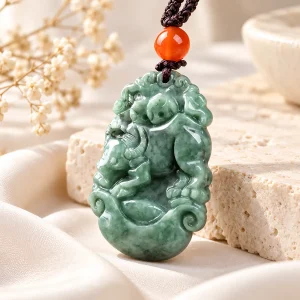
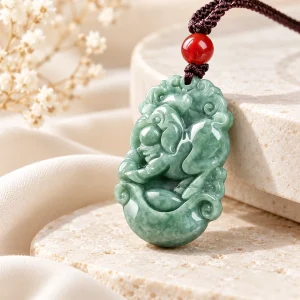
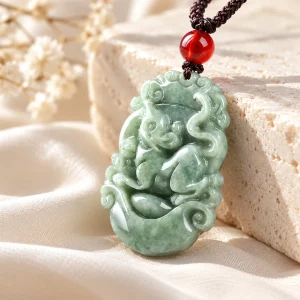
Jade monkey pendant, Chinese zodiac sign
59,90 € Add to cart -
Jade ox pendant, Chinese zodiac sign
59,90 € Add to cart -
Jade phoenix pendant with silver tone wings
50,90 € Add to cart -
Jade pig pendant, Chinese zodiac sign
59,90 € Add to cart -
Jade plaque pendant, an engraved figure
40,90 € Add to cart -
Jade rabbit pendant, Chinese zodiac sign
59,90 € Add to cart -
Jade rat pendant, Chinese zodiac sign
59,90 € Add to cart -
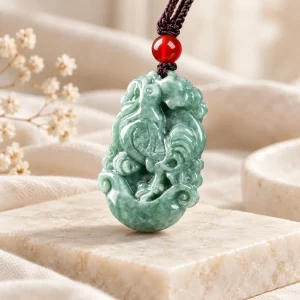
Jade rooster pendant, Chinese zodiac sign
59,90 € Add to cart -
Jade snake pendant, Chinese zodiac sign
59,90 € Add to cart -
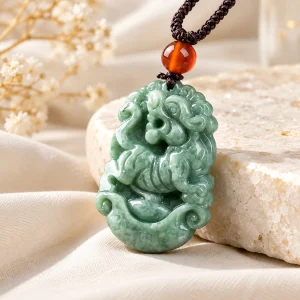
Jade tiger pendant, Chinese zodiac sign
59,90 € Add to cart -
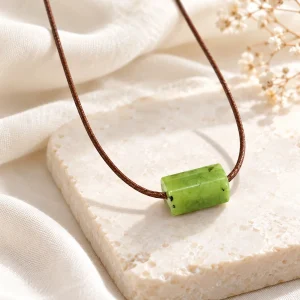
Jade tube pendant on a brown cord
45,90 € Add to cart -
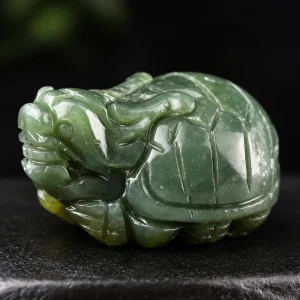
Jade turtle pendant in carved nephrite
47,90 € Add to cart
The shapes, and what each one says
This grid reads by motif as much as by colour, and the motifs are not decorative: they are ancient forms, several of them documented since the Chinese Neolithic.
- The Bi disc
- A ring pierced at its centre, carved from the block. It is the oldest form of Chinese jade, present as early as the Liangzhu culture. The hole is not a manufacturing accident: it is the form. What the motifs mean.
- The Buddha
- The laughing one with the round belly, the most asked for of all. The green lightens on the raised parts and darkens in the hollows, which is what gives the face its relief. Where this motif comes from, and what is attributed to it.
- The dragon, the turtle
- Carved and drilled. The scales and grooves hold the shadow, the polished surfaces send the light back: the green moves as you walk, which a smooth cabochon does not do.
- The cabochon, the drop
- No motif, everything in the material. It is the mounting that forgives a mediocre stone the least, and the one that shows a fine stone best.
What the trade calls “grade A”, and what that means
On this search you will come across pendants sold as “genuine grade A jade”. The vocabulary is established in the results and it reassures. It deserves to be explained, because it covers two very different things.
A, B and C designate TREATMENTS, and nothing else. A for a jadeite whose colour and structure have not been modified, B for a stone bleached with acid and then impregnated with resin, C for a dyed stone. It is the only classification that exists, and it says nothing about the beauty of the stone.
The A, AA, AAA scale has no existence. It borrows its letter from the real classification to designate a quality level decided by the seller. The ambiguity is not innocent, and you will not find it anywhere on this site.
What stops me writing “grade A” on my own pendants is simple: I do not know. My supplier does not know the status of their stock, and weighing establishes the mineral without saying anything about resin. Only infrared spectroscopy in a laboratory would settle it, and I do not have it done.
The treatment status of these forty-five pieces is therefore not determined, written out in full on every product page. The classification in full, and the information sheet required by the decree.
Genuine, and what the scale establishes
What is sold under the name jade is very often serpentine or dyed quartzite. On a carved pendant the confusion is even easier: the carving catches the eye and draws attention away from the material.
Before I put a listing online I order one example; when it reaches me without bail or chain, I weigh it in air and then hanging in a glass of water, and I publish the density obtained with its date.
| Material | Density |
|---|---|
| Jadeite | 3.25 to 3.36 |
| Nephrite | 2.90 to 3.03 |
| Serpentine | about 2.6 |
| Quartzite, dyed or not | about 2.65 |
It is that figure which allows the word genuine here: it sets real jade against serpentine, and never the untreated against the treated. The method and its three limits, and how to check a pendant you already own.
Nephrite has a luster glass does not have
It is the best field marker, and it calls for no instrument. Polished nephrite has a waxy luster, between wax and soap: the light seems to sink in a little before coming back. Glass has a vitreous luster, sharp and hard, which stays on the surface.
Jadeite is livelier, closer to glass, but its grain stays granular under strong magnification where glass is perfectly smooth and sometimes carries bubbles. The six criteria I look at.
Always look at a pendant against the light, never under a ceiling lamp. Under diffuse light from the front, a jade looks flat and opaque: that is the first disappointment people write to me about with this material.
Bail, chain or cord
A pendant drilled right through is worn on a cord, adjustable with a sliding knot, and puts no metal against the skin. A stone with a bail calls for a chain, in sterling silver or gold plated. Plated is written plated, on the product page as here.
Silver holds the green without warming it; gold tone pulls it toward the warm side and brings light back to the face. What gold changes. For chain length, the markers are here: a pendant hangs lower by its own height, bail included.
A useful reminder: the chain is not always included. What each listing includes is written on its product page, and nothing there is implied. See also the jade necklaces, where stone and chain go together.
Wearing it, and not damaging it
A pendant is the best protected piece in the catalogue: it hangs, it does not knock. What threatens it is a scratched polish and a fall onto a hard floor.
- The hardness of jade is ordinary, 6 to 6.5 for nephrite and 6.5 to 7 for jadeite, and the quartz in household dust sits at 7. One pouch per piece. Why.
- Lukewarm water, a mild soap, a very soft brush for the hollows of a carving. Never ultrasound, never steam, never solvent. The detail.
- On a cord, it is the cord that wears out, not the stone. When to change it.
What follows changes register, and I flag it rather than blending it into the rest. Nothing here is demonstrated: it is what traditions have attributed to this stone and these motifs.
The laughing Buddha, the Bi disc, the dragon and the turtle each carry a meaning in Chinese culture, and those meanings are documented. What tradition puts into jade, and why it is given as a gift.
Frequently asked questions
What does “grade A jade” mean?
That the jadeite has been neither bleached, nor impregnated, nor dyed: cutting and polishing only. It is a treatment status, not a quality level. Beware the A, AA, AAA scale some sellers use: it has no normative existence and borrows its letter from the real classification. The detail.
Are your pendants grade A?
I do not know, so I write it nowhere. My supplier does not know the status of their stock, and my scale establishes the mineral without saying anything about resin. Treat every piece as if it might be impregnated: no heat, no ultrasound, no solvent. Why.
What does the pierced Bi disc mean?
It is the oldest form of Chinese jade, carved as early as the Liangzhu culture, before 2000 BCE. It is found in burials, and its exact meaning is still debated: the reported interpretations run from the sky to a symbol of authority. What the motifs mean.
How can I recognise a dyed glass pendant?
By the luster first: glass is vitreous and sharp, nephrite is waxy and the light seems to sink into it. By the bubbles, visible with a loupe in glass and never in jade. And by density, which settles it for good. The steps to follow.
Is the chain included?
It depends on the listing, and it is written on every product page. Some pieces are sold mounted on a chain or a cord, others on their own with their bail. Nothing is implied: when it is not written, it is not included.
Can a jade pendant break?
Jade is exceptionally tough, far more than most stones, and that is what made it possible to carve axes from it in the Neolithic. But a thin edge or an openwork carving chips on a hard impact. The difference between hardness and toughness.