Jade Bracelets
A bangle carved from a single block, a strand of round beads, a deep green or a milky white. Thirty-eight pieces, in jadeite or nephrite, and the mineral is named on each one.
A jade bracelet is chosen by size first, then by colour: a bangle does not open and cannot be resized. Measure how your hand slips through before you order.
AffinerStoneColourStone shape+6
Showing 1–36 of 38 results
-

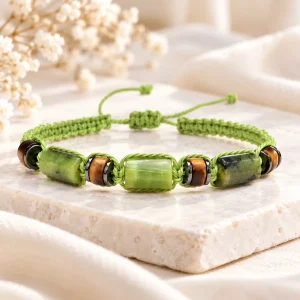
Adjustable Jade Bracelet on a Green Cord
50,90 € Choose a size -
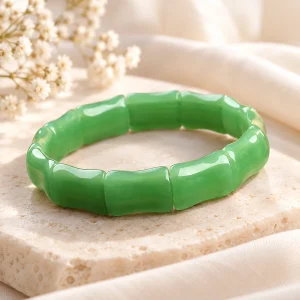
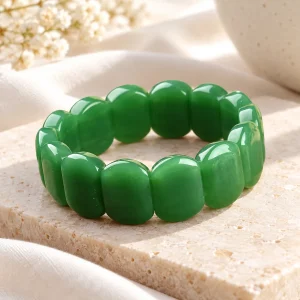
Apple Green Jade Bracelet, Wide Plaques
50,90 € Choose a size -
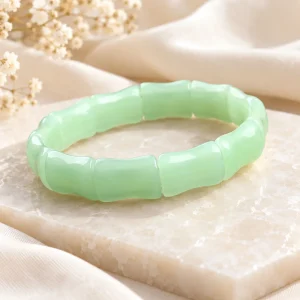
Bamboo Jade Bracelet, Segments Like a Stalk
50,90 € Choose a size -
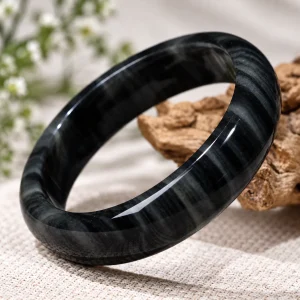
Black Jade Bangle, Nephrite Carved from One Block
94,90 € Choose a size -
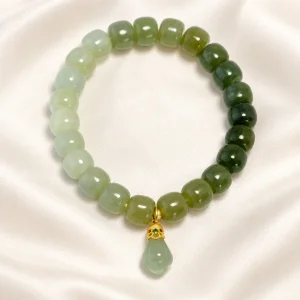
Buddhist Jade Bracelet, a Strand of Nephrite Beads
42,90 € Choose a size -
Carved Jade Plaque Bracelet, a Row of Slabs
50,90 € Choose a size -
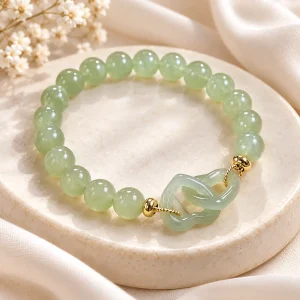
Carved Knot Jade Bracelet, Two Interlaced Loops
40,90 € Choose a size -
Carved White Jade Bracelet, Plaques in Relief
50,90 € Choose a size -
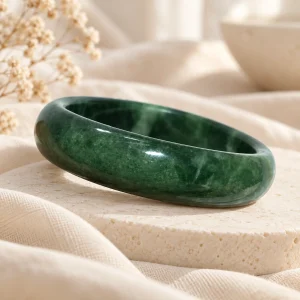
Dark Green Jade Bangle, Wide and Carved from One Block
60,90 € Choose a size -
Dark Green Jade Bracelet, Polished Plaques
50,90 € Choose a size -
Domed Jade Bangle in Dark Green Nephrite
50,90 € Choose a size -
Double Ring Jade Bracelet, Two Interlaced Circles
40,90 € Choose a size -
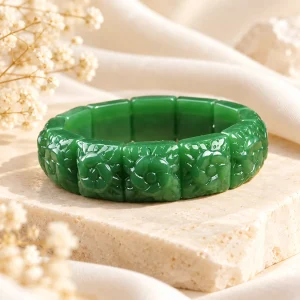
Engraved Jade Bracelet, Plaques with a Carved Motif
50,90 € Choose a size -
Green and White Jade Bangle, Mottled Through the Stone
50,90 € Choose a size -
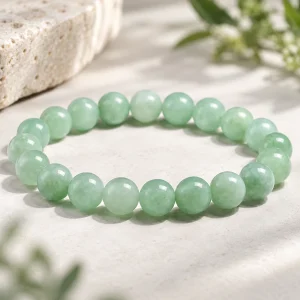
Green Jade Bead Bracelet in Nephrite
62,90 € Choose a size -
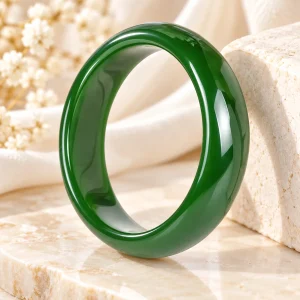
Green Jadeite Bangle, Carved from a Single Piece
84,90 € Choose a size -
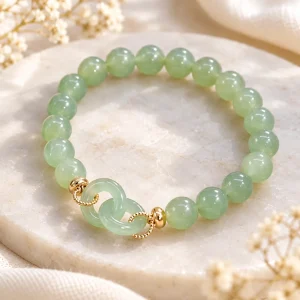
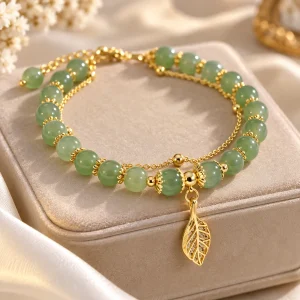
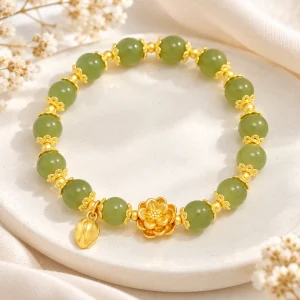
Jade and Gold Bracelet, Green Jadeite Beads
62,90 € Choose a size -
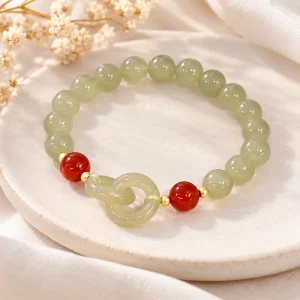
Jade and Red Agate Bracelet, Interlaced Rings
40,90 € Choose a size -
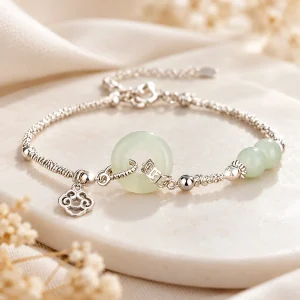
Jade and Sterling Silver Bracelet with a White Disc
40,90 € Choose a size -
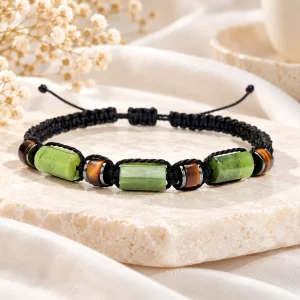
Jade and Tiger Eye Bracelet on Black Cord
50,90 € Choose a size -
Jade Ball Bracelet, Solid Nephrite Beads
42,90 € Choose a size -
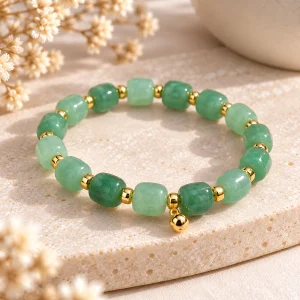
Jade Barrel Bead Bracelet with Gold Tone Spacers
67,90 € Choose a size -
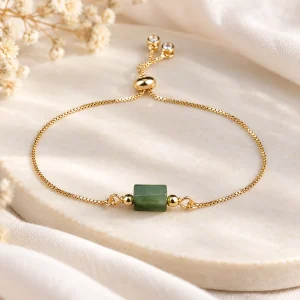
Jade Chain Bracelet, Gold Tone with a Green Tube
57,90 € Choose a size -
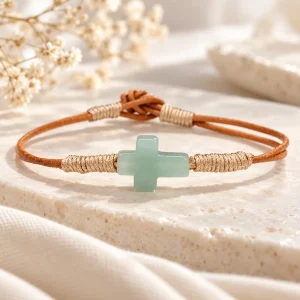
Jade Cross Bracelet on Two Leather Cords
40,90 € Choose a size -
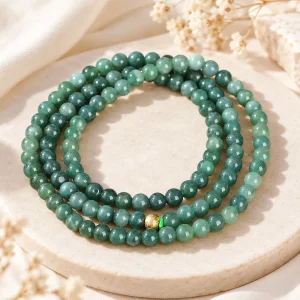
Jade Mala Bracelet, Three Turns of Beads
74,90 € Choose a size -
Lotus Flower Jade Bracelet on a Gold Tone Flower
29,90 € Choose a size -
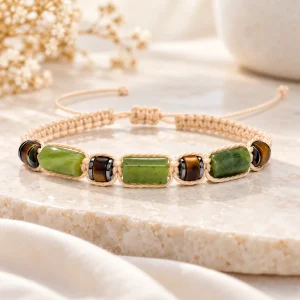
Macrame Jade Bracelet in Beige, Tubes and Tiger Eye
50,90 € Choose a size -
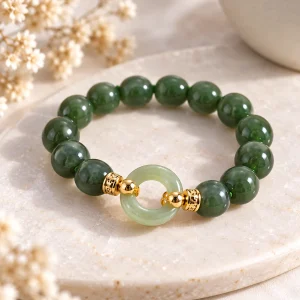
Men’s Jade Bracelet in Dark Green Nephrite
54,90 € Choose a size -
Nephrite Jade Bangle in Spinach Green, Polished Solid
97,90 € Choose a size -
Olive Green Jade Bracelet with a White Disc
40,90 € Choose a size -
Pale Green Jade Bracelet, Domed Plaques
50,90 € Choose a size -
Pixiu Jade Bracelet with a Gold Tone Beast
40,90 € Choose a size -
Thin Jade Bangle, a Slender Ring from a Single Block
40,90 € Choose a size -
White Jade Bangle in Nephrite, a Closed Bracelet
87,90 € Choose a size -
White Jade Beaded Bracelet in Nephrite
54,90 € Choose a size -
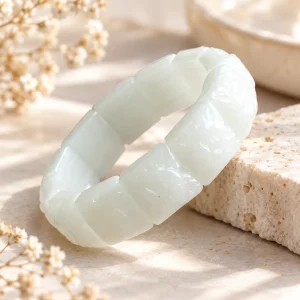
White Jade Plaque Bracelet, a Row of Slabs
50,90 € Choose a size
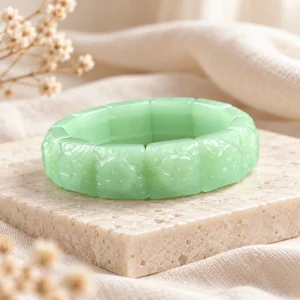
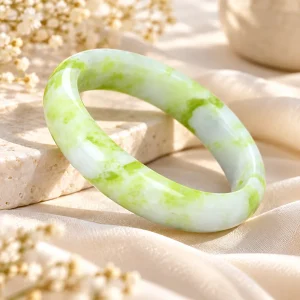
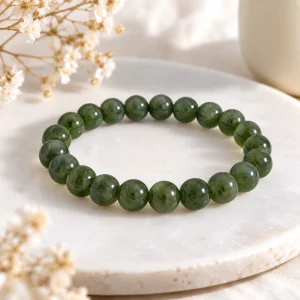
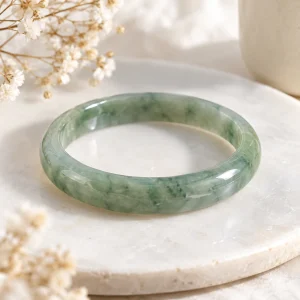
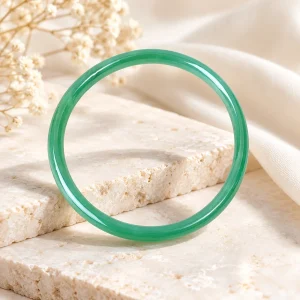
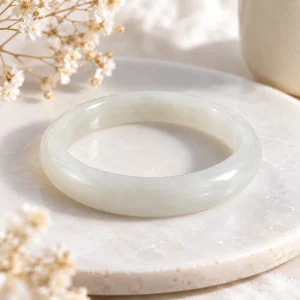
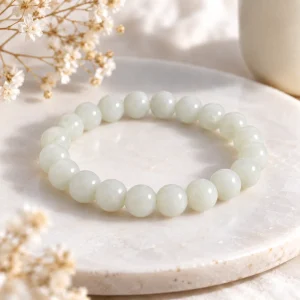
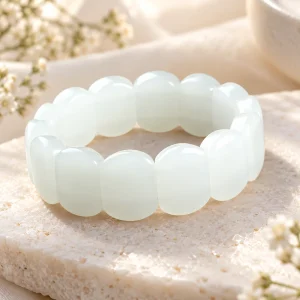
The bangle, and why it deserves a stop
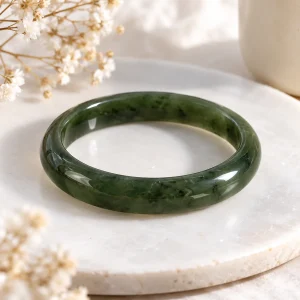
Nine of the thirty-eight pieces are bangles: a solid ring, carved from the block, with no hinge and no clasp. It is the oldest form of the jade bracelet, and the only one that cannot be rescued if the measurement is wrong.
Jade lends itself to it because it is tough rather than hard. Its interlocking fibrous structure lets it hold as a thin ring where a stone with cleavage would split, and it is the same property that made the polished axes of the Neolithic. The difference between hardness and toughness is worth understanding before buying: it also explains why a bangle survives daily wear and snaps cleanly on a corner knock.
It is not your wrist you have to measure, it is how your hand slips through. Hand closed, thumb folded into the palm, measure around the widest point and divide by 3.14. It is the number one reason for returns in this market, far ahead of colour.
The inner diameter of each bangle is written on its product page, and it is written there after the example has arrived. You will not find a conversion chart here: I publish no measurement I have not taken.
The green, and everything it is not
The green of a jade does not come from the same element in each species. In jadeite, the clean vivid green comes from chromium; in nephrite, from iron, hence the so called spinach green, darker and more closed. That is why two equally green stones do not look alike.
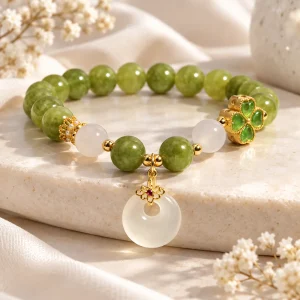
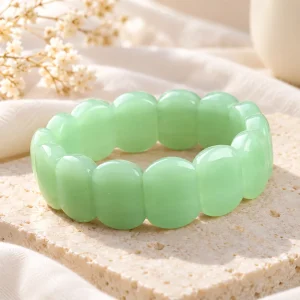
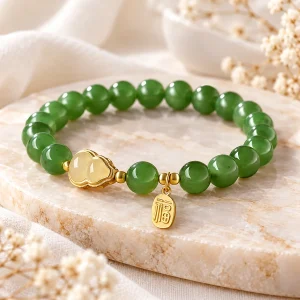
This grid runs from an almost transparent water green to a bottle green that looks black in the shade, by way of the moss green of the bead strands. There is also an ivory white and a honey coloured nephrite, because jade is not only green.
A word on what is sold elsewhere as a green jade bracelet: a fluorescent, even green with no grain is almost always dyed material. Added colour can be recognized, and the true green of jade never has that regularity.
Genuine, and what the word covers exactly
Jade is one of the most imitated stones on the market. What circulates under its name is very often serpentine, sold as “new jade” or “Korean jade”, or dyed quartzite, sold as “Malaysia jade”. None of these labels means jade.
The difference can be measured. Before I put a listing online I order one example; when it reaches me without a setting, I weigh it in air and then hanging in a glass of water, and I publish the density obtained with its date.
| Material | Density |
|---|---|
| Jadeite | 3.25 to 3.36 |
| Nephrite | 2.90 to 3.03 |
| Serpentine | about 2.6 |
| Quartzite, dyed or not | about 2.65 |
It is that figure which allows the word genuine on this page: it sets real jade against serpentine, and nothing else. The method, with its three limits, and how to check for yourself.
What that figure does not say: the treatment. A jadeite bleached with acid and then impregnated with resin is still a jadeite, and the resin does not change the mass enough to show. My supplier does not know the status of their stock, and I do not invent it.
So you will never read “grade A jadeite”, “type A” or “untreated” on these pages: the treatment status is not determined. The information sheet explains it in full.
Beads or bangle, how I would choose
- The bangle
- Does not open, does not adjust, almost never comes off. It is an object you wear for years. It asks for an accurate measurement and it rewards one.
- The bead strand
- Slips on and off, forgives a wrist that changes, and is strung on doubled thread. The green varies from one bead to the next, which is the opposite of a flaw.
- With metal
- A clasp in sterling silver, or gold plated. Plated is written plated, on the product page as here. What gold changes in the way the green is seen.
- With no metal at all
- The strands closed with a flat knot, and the bangles. Nothing that can green the skin, nothing that snags a jumper.
For a gift the question is different: what to choose without knowing the size. And if the bracelet is for a man, dark greens and solid beads are the safest track.
Wearing it, and not damaging it
Jade is tough but its hardness is ordinary, 6 to 6.5 for nephrite and 6.5 to 7 for jadeite. The quartz in household dust is at 7: it therefore scratches a jade polish. A bracelet that travels in the same pouch as another piece arrives marked.
- Lukewarm water, a mild soap, a soft cloth. The detail.
- Never ultrasound, never steam, never solvent, since the treatment status is unknown and a resin would not withstand it.
- Each piece in its own pouch. Storing jade jewellery.
- On a bead strand, the thread wears out before the stone. When to have it restrung.
What follows changes register, and I flag it rather than blending it into the rest. Nothing here is demonstrated: it is what traditions have attributed to this stone, and I report it because it is part of its history.
The jade bracelet worn on the left wrist, the custom of never taking it off, the meaning given to a bangle that breaks: these usages are old and documented. What tradition puts into it, and what is said of a broken bangle.
Frequently asked questions
How can I tell whether a jade bracelet is genuine?
Density settles it without ambiguity: a jadeite is at 3.25 or above, a nephrite around 2.95, a serpentine at 2.6 and a quartzite at 2.65. It can be measured with a kitchen scale, a thread and a glass of water. The other signs, coolness to the touch, the sound when struck, translucency, point a direction but prove nothing on their own. The steps to follow.
Which bangle diameter should I choose?
The one that lets your closed hand through, thumb folded, with one to two millimetres of margin. Measure the circumference of the hand at its widest point and divide by 3.14. A bangle that only just fits goes on once and will not go on again on a hot day. Send me your measurement if you are torn between two diameters.
Are your bracelets treated?
I do not know, so I write it nowhere. My supplier does not know the status of their stock, and weighing establishes the mineral without saying anything about resin. Only infrared spectroscopy in a laboratory would settle it. Treat every piece as if it might be impregnated: no heat, no ultrasound, no solvent. The detail.
Jadeite or nephrite, which should I choose?
Jadeite is harder, more translucent, and its vivid green is more sought after. Nephrite is tougher, more muted, and gives the dark greens and the milky whites. They are two unrelated minerals, separated in 1863 by Alexis Damour. What really tells them apart.
Can a jade bracelet be worn every day?
Yes, and that is exactly what it is made for: jade takes knocks better than most stones. What it fears is the polish being scratched by dust, and thin edges on a hard corner. Take it off for sport and for housework.
Where does your jade come from?
From channels outside Burma. The state company that controls Burmese jade has been sanctioned by the United States since 8 April 2021 and by the European Union since 21 June 2021, and a large part of that trade benefits the military: I do not want it in this catalogue. When an origin is not confirmed to me in writing, the product page does not state it. My origin charter.