Maori Pounamu: the jade I don’t imitate
This page covers New Zealand pounamu: which minerals the word is made of, who has owned the stone since 1997, what the law lets leave the country and what it keeps back, what the hei-tiki and the koru are, and why none of my product pages will ever carry these forms.
Pounamu is not a variety of jade or a shade of green: it is a New Zealand category that is at once mineral, legal and cultural, ownership of which was vested in the Ngāi Tahu iwi by a 1997 law, and that is what underpins my refusal to copy its forms.
On the mineral side, it is neither a single species nor jadeite: pounamu is mostly nephrite. Lumping it together with the Burmese bracelets the trade calls jade is therefore a confusion of species, the first one that the jade stone page untangles.
My name is Jade, and I run a jade jewellery workshop: I choose the pieces, have them set, and weigh one example of each reference before it goes on sale. I am not a gemmologist or a therapist, and on this particular subject I speak for no one.
Pounamu is not the name of a mineral
The word comes from Māori and refers to the green stone of the South Island, which New Zealand English calls greenstone. It is not a species but a category, which identifies stones first by colour and translucency.
Te Ara, the encyclopedia published by New Zealand’s Ministry for Culture and Heritage, distinguishes four main types: kawakawa, the most common, deep green to dark green and often flecked; kahurangi, the rarest, light green and very translucent; īnanga, pearl grey to pale green; and tangiwai, translucent like glass.
The first three are nephrite, a calcium amphibole of the tremolite-actinolite series, with a density between 2.90 and 3.03. The fourth is not: tangiwai is bowenite, a translucent variety of serpentine, which Te Ara places only at the entrance to Piopiotahi, Milford Sound.
A single category therefore contains two minerals that my page on jadeite and nephrite separates, one of which is not jade. Pounamu belongs to another way of naming things, which makes it neither vague nor wrong: jade has several naming systems, and they do not correct one another.
Tangiwai, and the limit of my scale
This detail interests me because it exposes a flaw in my method. If someone handed me a piece of tangiwai, my scale would put it at around 2.6, in serpentine territory, and I would write serpentine. I would be right about the mineral, and I would have said nothing about the object.
My rule does not change for all that: here, a serpentine carries the name serpentine and the word jade does not appear in its title, because France has a market where that word is used to pass one stone off as another, and I keep the list in stones sold as jade. But that is a response to that particular market, and tangiwai is an imitation of nothing. What my weighing says remains narrow, with its limits on the weighing page: it names the mineral of a bare stone, it does not say what an object is.
The jade pendants available now
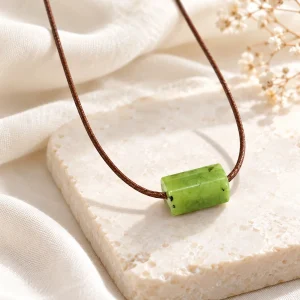
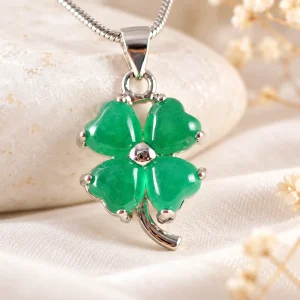
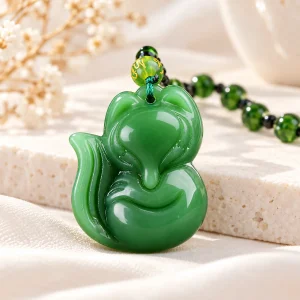
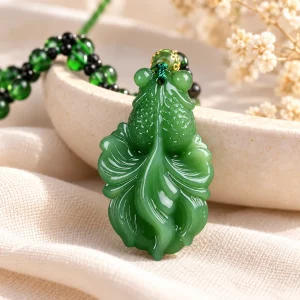
Who has owned pounamu since 1997
On the French pages I opened, this point is replaced by a vague phrase about respecting a culture. It is far more precise than that, and it is a matter of property law.
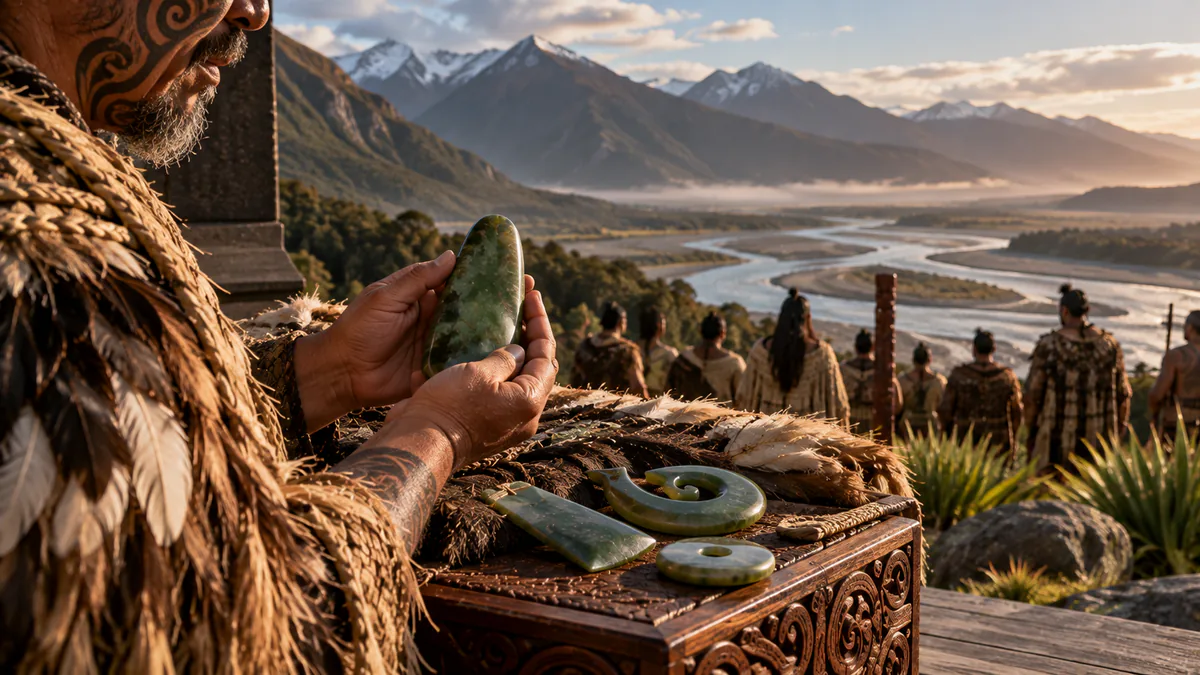
The Ngai Tahu (Pounamu Vesting) Act 1997 gives effect to a deed of settlement signed in 1996 between the Crown and Te Rūnanga o Ngāi Tahu. All pounamu found in its natural state within the takiwā of Ngāi Tahu Whānui, the iwi’s territory, including the territorial sea, and which belonged to the Crown, ceases to be Crown property and becomes the property of Te Rūnanga o Ngāi Tahu.
The agency that issues New Zealand mining permits applies this bluntly on its page about pounamu areas: a permit granted under the Crown Minerals Act gives no rights to pounamu, and removing it without Ngāi Tahu’s consent is unlawful. The stone in the river has an owner, in the ordinary sense of the word.
The comparison sheds light on our own text: French Decree No. 2002-65 says nothing about who owns a gemstone, it regulates its name, what may be written on a label. Two countries, two places where the law steps in.
What leaves New Zealand, and what stays
The second part concerns customs. Exporting pounamu is prohibited without the consent of the Minister of Customs, under the Customs Export Prohibition (Pounamu) Order 2021. But New Zealand Customs publishes two exceptions, and they change the meaning of the rule.
- The prohibition does not apply when the total weight of pounamu in a single shipment does not exceed five kilograms.
- Nor does it apply to objects made of pounamu, and Customs cites jewellery, pendants and carvings.
When consent is required, it is only given after written advice from Te Rūnanga o Ngāi Tahu, or from the Māwhera Incorporation for stone from the Arahura catchment. What the text holds back is therefore not the finished object but the raw block in quantity, the kind taken out of a river and sold by weight elsewhere.
Hence the consequence that concerns me, and I draw it out loud: no rule I have found prohibits me from selling a pounamu pendant. My refusal is not a legal obligation in disguise, it is a choice, and passing off a choice as a constraint is exactly the kind of arrangement this site spends its time taking apart.
Hei-tiki, koru, hei matau: forms, not motifs
Hei means worn around the neck. The hei-tiki is a stylized human figure, the hei matau a fishhook, the koru the spiral of an unfurling fern frond. The toki, the adze, recalls the stone’s first use, and it is toughness, not hardness, that explains that use.
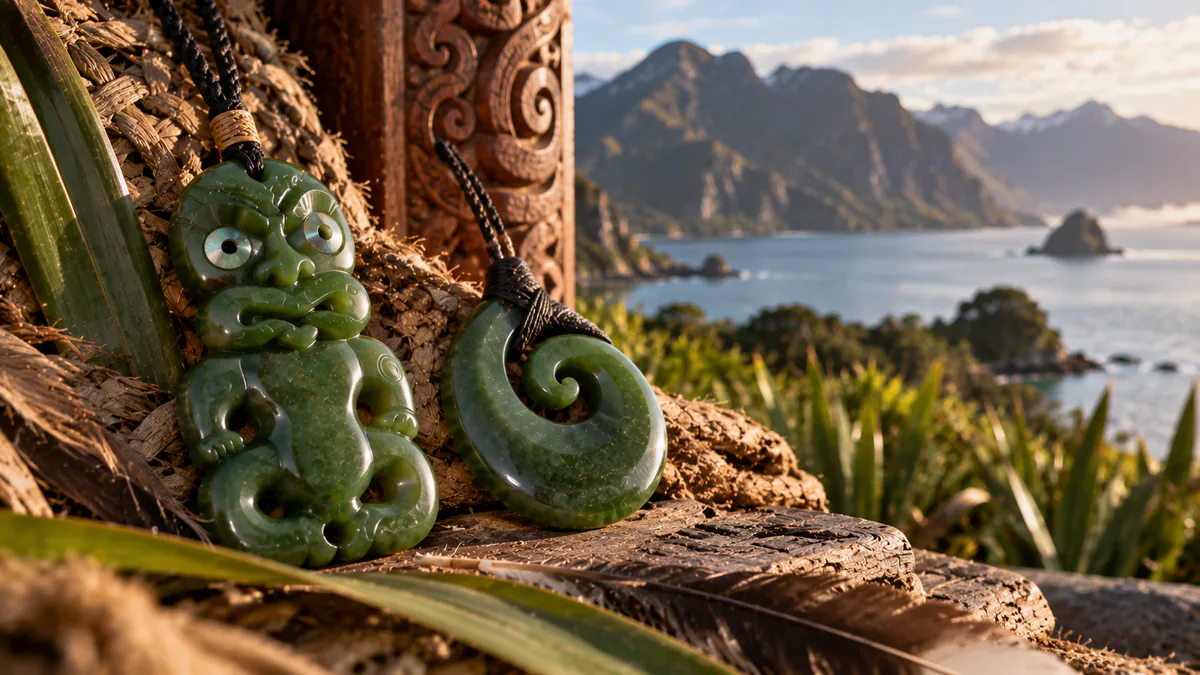
What separates them from the motifs I offer comes down to a word I take from New Zealand sources: taonga. A hei-tiki that is handed down carries a name and a genealogy, a whakapapa, and its value lies in that chain of hands, not in the stone. An object carved last week has none of that, however close the resemblance.
The motifs I do carry come from a Chinese repertoire carved for trade for centuries: dragon, bat, gourd, pierced disc (jade motifs and the Buddha pendant). It is not the same situation, and I do not claim the line is clear everywhere.
The jade bracelets available now
Why none of my product pages will carry these forms
My argument fits in one sentence: putting a hei-tiki on Russian or Canadian nephrite would be the same fault as selling serpentine under the name jade. In both cases, the buyer receives an object whose form tells one story and whose material, workshop and origin tell another.
With one difference: in the second case you lie about the mineral, and my scale proves it; in the first you lie about nothing measurable, you let people believe. That is harder to challenge, which is why I write it here rather than on a label.
The demand is right in front of me: on 8 September 2026, while noting the searches for this topic, I found pendentif maori jade and pendentif tiki jade (French for Maori jade pendant and tiki jade pendant), at about twenty monthly searches each in France. Someone will meet that demand. I am not saying the workshops that do so are breaking the law, since they are not: I am saying what I can write on a product page without contradicting myself, and that I cannot write. Same reasoning as for Burmese jade, followed up in where my jade comes from.
What I am not the person to tell you
What follows changes register, and I flag it rather than blending it into the rest. Nothing in it is proven: it is what traditions have attributed to this stone.
New Zealand sources describe pounamu as something that is said to be given rather than bought, passed down from one generation to the next, and to gain from being worn. I report, I do not explain: I am a French shopkeeper based in Tallinn, I have no standing to teach what a hei-tiki means, and those who know publish it themselves.
What I can stand behind is the law and the mineralogy, texts and measurements anyone can check. The rest belongs to those whose heritage it is. And I will never write that a stone heals, protects or brings luck.
Where to buy pounamu, and it is not here
If you are looking for some, the answer does not go through me. Ngāi Tahu runs its own authenticity system: only licensed carvers may apply its mark, and each piece receives a traceability code. Entered online, that code returns the stone’s origin and whakapapa, how it was worked, and the name of the artist who carved it.
It has to be said plainly: that is better proof of origin than mine. I publish a density, which answers the question of the mineral and stops there, and I detail what that covers in what I publish on every product page. They publish a complete chain, from riverbed to workbench.
What I offer are stones from other deposits, set or chosen one by one, with the mineral and the number behind it written on the product page: the map of origins is in where jade comes from.
Questions I get asked
Is pounamu jade?
Largely, yes. Kawakawa, kahurangi and īnanga are nephrite, one of the two minerals legitimately called jade. Tangiwai, however, is bowenite, a serpentine: fully pounamu, and not jade in the mineralogical sense.
Is pounamu jadeite?
No. The varieties the word covers are nephrite, except tangiwai, which is a serpentine. A seller advertising New Zealand jadeite is not describing pounamu.
Can I bring pounamu back from New Zealand?
Yes, if it is a finished object. New Zealand Customs excludes objects made of pounamu, jewellery, pendants and carvings, from the prohibition, as well as any shipment whose total weight of pounamu does not exceed five kilograms. It is the raw block in quantity that the text holds back.
Is a jade tiki pendant bought in France a fake?
Not in the legal sense: nothing prohibits carving that form elsewhere, and the stone may be genuine nephrite. The question to ask the seller concerns the origin of the stone and of the workshop, and many product pages answer neither.
How can you tell whether pounamu is authentic?
Through traceability rather than the stone. Ngāi Tahu’s system attaches a mark and a code to each piece from its licensed carvers, and that code can be checked online. Weighing would say nephrite or serpentine, which is not enough: nephrite is also collected in Siberia and Canada.
Do you sell pounamu?
No, and I do not intend to start. I sell stones from other deposits whose mineral I publish along with the number that establishes it. For pounamu, go to Ngāi Tahu’s licensed carvers.
Where I checked
What comes from a named source. The four varieties, the nephrite of the first three and the bowenite of tangiwai come from Te Ara, the encyclopedia published by New Zealand’s Ministry for Culture and Heritage. The vesting of ownership is that of the Ngai Tahu (Pounamu Vesting) Act 1997: the official New Zealand legislation website refuses my automated requests, so I have not read that text myself and I report its content through the pounamu areas page of the New Zealand mining permits agency, which applies it. The two customs exceptions and the written advice from Te Rūnanga o Ngāi Tahu or the Māwhera Incorporation are read on New Zealand Customs’ export prohibitions page. The authenticity system was read on 10 September 2026 on the Ngāi Tahu Pounamu traceability page; I do not give the length of the code, as I did not note it. The densities are those of the mineralogical literature I already publish.
What is a dated market observation. On 8 September 2026, while noting the French searches for this topic, I found pendentif maori jade and pendentif tiki jade at about twenty monthly searches each. And one clarification that cuts the other way: I have never held pounamu in my hands and have weighed none. Nothing you read here comes off my scale.
What is my own reasoning. The parallel between selling serpentine under the name jade and putting a hei-tiki on nephrite from another continent is my argument, not an established fact, and it can be challenged. The refusal that follows from it is a business decision, not a rule of law, and I made a point of writing that New Zealand law does not require it. Finally, I write Māori, Ngāi Tahu and takiwā with their macrons, which the official title of the 1997 law, being older, does not carry. If you find an error here, write to me: I will correct it and note the change.
In one sentence
Pounamu is mostly nephrite, property in the legal sense since 1997, and a heritage whose forms are not for copying: so you will find no hei-tiki or koru in my shop, and you will find instead the name of the mineral of every piece.